Alter Nature: Exploring Life in Computational Art改變中的自然:在計算藝術中探索生命
Author – Wu, Ziwei (吳子薇), PhD in Academy of Interdisciplinary Studies, Hong Kong University of Science and Technology
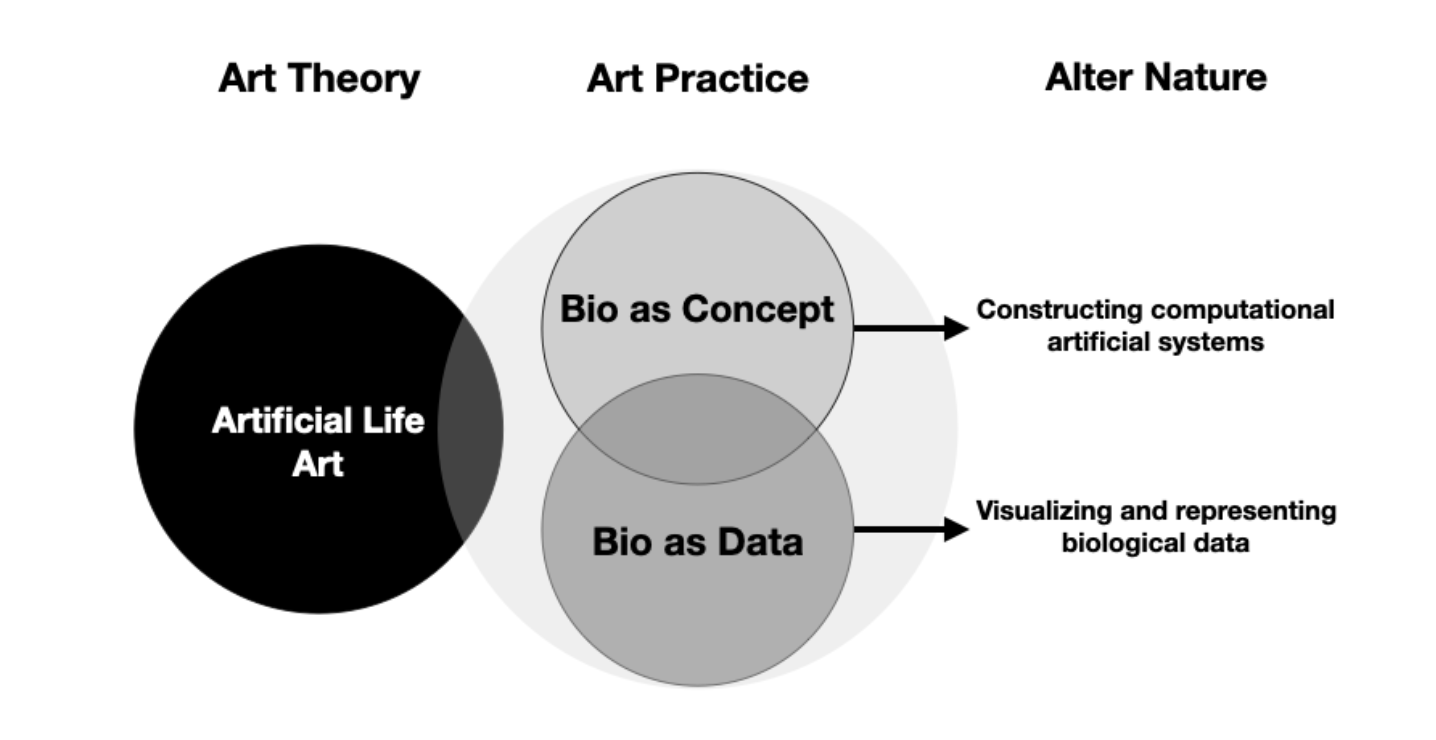
Abstract– Emerging in the late 1980s amid explorations of computing, robotics, and synthetic biology, Artificial Life (ALife) investigates the two conceptions of life and their natural processes—“life-as-we-know-it” and “life-as-it-might-be”—through generative systems that mimic biological phenomena. These conceptions provides the aspects of life to understand the altered and altering nature. While traditional ALife approaches—such as genetic algorithms and agent-based systems—reconstruct life within computational media, contemporary data-driven AI further extends this paradigm. The proliferation of AI-generated content and algorithmic creatures redefines life through data inputs, intensifying the interplay between technology and biology. This convergence necessitates a critical examination of Alter Nature: how human interventions—from artificial ecosystems to bio-digital hybrids—reshape natural processes. To address the two conceptions, this thesis proposes theoretical frameworks to investigate these processes in the artistic context: 1. Bio as Concept: Constructing computational artificial systems with the aim of altering nature. 2. Bio as Data: Visualizing and interpreting biological data through AI and generative tools, examining how human activities have altered nature. Through research and artistic practice, this thesis documents the theoretical frameworks for Alter Nature in computational art.
